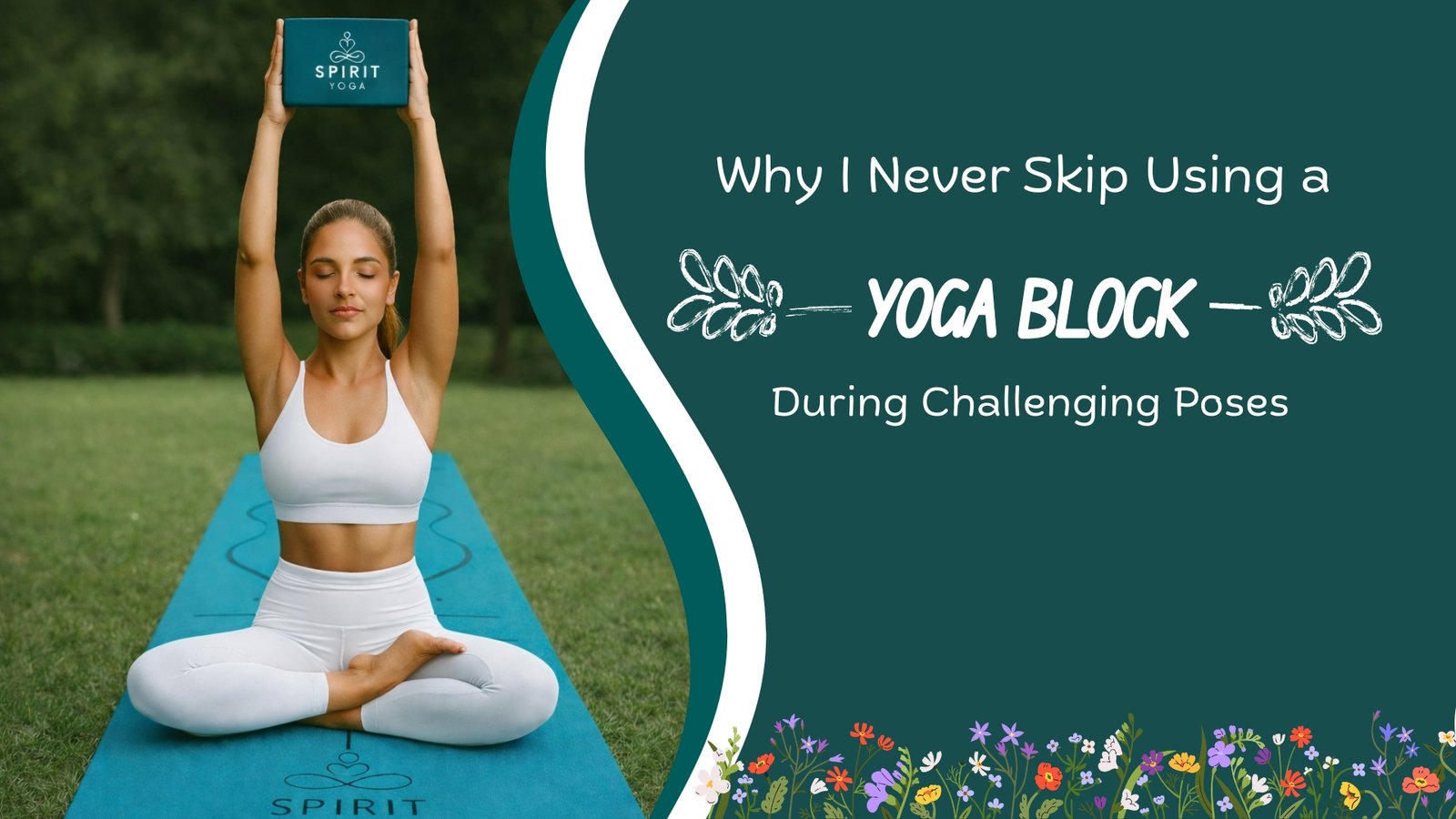
Yoga is often seen as a quiet, graceful practice, but anyone who has stepped onto the mat knows that many poses ask a lot from the body. Tight hips, limited flexibility, unstable balance, or simple fatigue can make even familiar postures feel demanding. Over the years, one tool has consistently helped me stay committed to my practice without strain—the yoga block.
A yoga block may look simple, but its impact on alignment, confidence, and safety is profound. Especially during challenging poses, it becomes more than a prop; it becomes a trusted support that allows the body to open gradually, not forcefully.
A yoga block does not intend to make yoga easy negatively. Rather, it renders yoga affordable, clever, and viable. The block makes the earth seem closer to you so you can maintain the right posture when you have not yet have flexibility or strength to correspond with will.
Everybody is different. On other days, you might feel free and robust. The stiffness or imbalance may occur unexpectedly on other days. A yoga block adapts to these variations, and helps your body to be just as it is.
Challenging incorporates frequently a combination of factors: balance, flexibility, strength and concentration. Such poses include Triangle, Half Moon, Revolved Side Angle, Extended Hand-to-Big-Toe or deep seated forward folds that demand strict alignment. In its absence, it is easy to fall, overstrain, or strain joints.
A yoga block helps you:
Using a block allows the pose to work for you, not against you.
A safe and effective yoga practice depends on alignment. When there is an imbalance, the body balances in a sickly manner. A yoga block acts as a solid reference point, and it helps you feel in which position your body ought to be.
As an example, when standing on poses, the hand placed on a block keeps the chest open and the spine straight. Sitting on a block when in the seated poses lifts the hips and the spine remains in a relaxed posture. This develops overtime into muscle memory and body awareness that translates into unsupported practice.
Not all yoga blocks offer the same level of support. Choosing the right one makes a noticeable difference in your practice.
|
Quality |
Why It Matters in Practice |
|
Firm Support |
Holds body weight without collapsing or losing shape |
|
Lightweight Design |
Easy to carry, move, and adjust during practice |
|
Non-Slip Surface |
Prevents slipping in balance and strength poses |
| Comfortable Edges |
Feels natural under hands, hips, or back |
| Durable Material |
Maintains structure even with daily use |
| Eco-Friendly Build |
Supports mindful living and sustainability |
A well-designed yoga block should feel stable, safe, and comfortable—never distracting or unreliable.
Using a yoga block consistently does more than support individual poses. It reshapes how you approach your entire practice.
|
Benefit |
How It Helps |
|
Better Alignment |
Keeps joints and spine in safe positions |
|
Increased Confidence |
Reduces fear of falling or overstretching |
|
Improved Balance |
Adds stability in standing and one-leg poses |
| Safer Flexibility |
Encourages gradual opening without force |
| Reduced Injury Risk |
Protects muscles, joints, and ligaments |
| Longer Hold Time |
Allows deeper focus and controlled breathing |
| Stronger Foundation |
Builds strength from correct posture |
Rather than rushing progress, a yoga block teaches patience and respect for the body’s natural pace.
It is a myth that yoga blocks are used by beginners. As a matter of fact, experienced practitioners tend to use blocks in order to add depth to poses or experiment with variations or alignment. Blocks have been widely applicable in restorative yoga, yin yoga and even strength-based flows.
Yoga is not an activity, which involves getting into the deepest pose but it is a practice of awareness. Yoga block helps in sustaining that mindset on all levels.
Once the body is supported, the mind is able to rest. It is hard to hit the ground or stand on the foot, which also results in stress and frustration. Yoga block eliminates unwanted stress and one needs to focus on the breath and feeling again.
This is a psychological comfort particularly when taking extended holds and mindful flows. You do not struggle with the pose, but live it.
At MySpiritYoga, products are chosen with intention and care. Our yoga blocks are designed to support real practices—not just perfect poses.
What makes MySpiritYoga yoga blocks different:
When you buy from MySpiritYoga, you invest in a tool that grows with your practice and supports your long-term well-being.
Yoga blocks need to be little in size yet their influence is huge. They assist you in training safely on the bad days and intensifying your awareness on the good days. They remind you that you should not force progress, but be consistent.
This is why I never fail to use a yoga block when I am doing a difficult pose. It holds my practice truthful, kind and maintaining- all the way yoga should be practiced.
Copyright © 2025. Myspirityoga.com. All Rights Reserved
WhatsApp us