
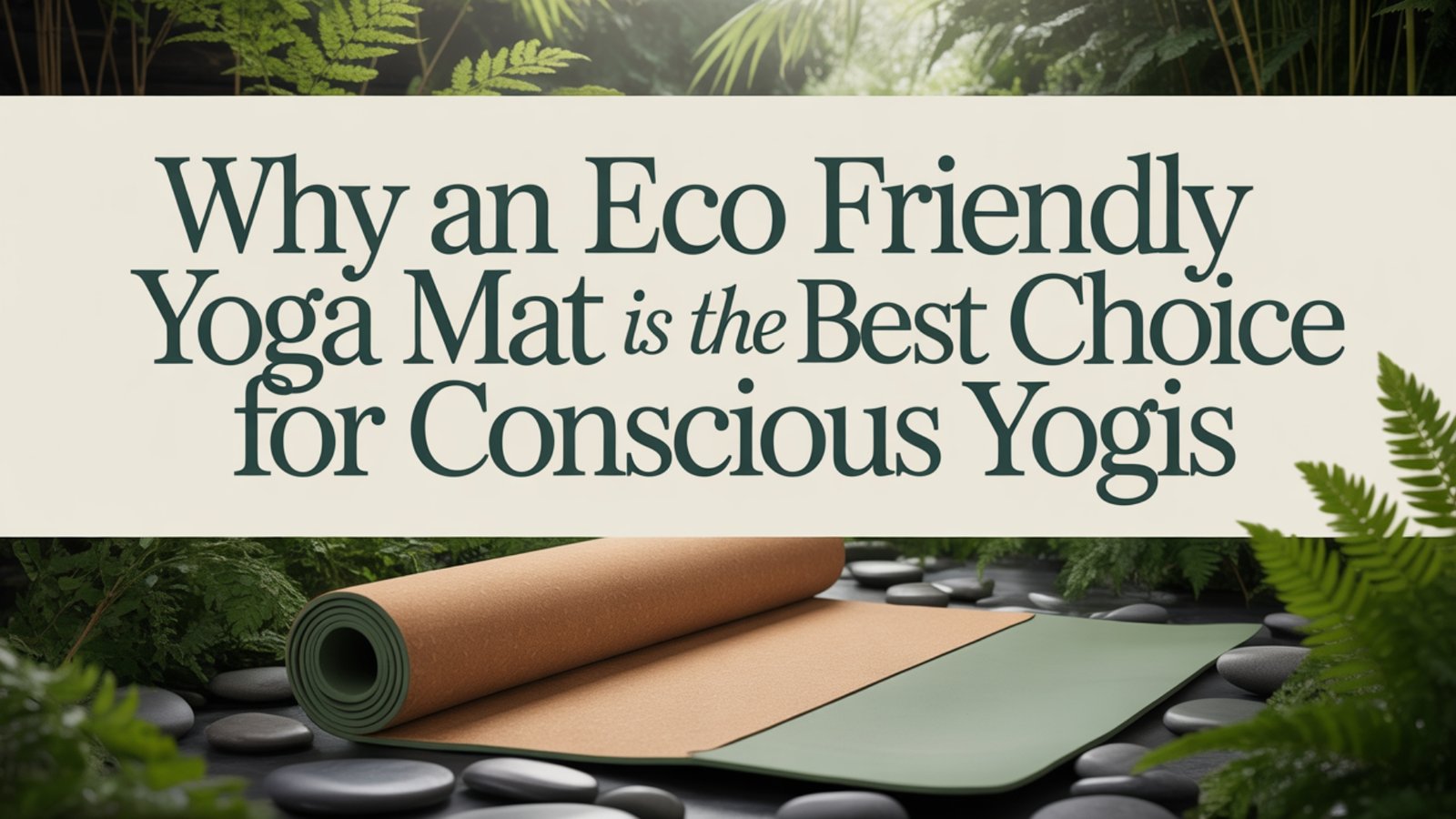
Yoga today is not just a fitness routine — it is a conscious lifestyle. It asks us to observe our breath, our choices, our actions, and even the impact we leave behind in the world. As more people step into mindful living, questions naturally arise:
“Am I practicing yoga on a mat that aligns with my values?”
“Am I harming the environment by using a plastic-based mat?”
This is exactly why the eco friendly yoga mat has become the preferred choice for yogis who want their practice to be clean, safe, and aligned with sustainability. In this comprehensive guide, we explore — in detail — why eco-friendly mats are transforming modern yoga practice and why switching to one is one of the most conscious decisions you can make.
Before understanding why eco mats are better, we must look at what traditional mats are made of.
Most cheap yoga mats are made from — one of the most toxic plastics. PVC is:
PVC mats take up to 500 years to decompose.
So, the mat beneath your feet during meditation or pranayama might be polluting the very air you breathe.
This is why conscious yogis around the world are shifting to cleaner, safer, and sustainable alternatives.
An eco friendly yoga mat is designed with:
Eco mats allow you to practice without harming your health or the planet.
Below are the safest and most popular materials used in sustainable mats:
All these materials reduce environmental harm and enhance the feel of your practice.
Your mat is where you:
Using a toxic mat means inhaling or touching chemicals you don’t even notice.
If yoga is about wellness, your mat should support — not contaminate — your practice.
Many people assume eco-friendly mats are only about sustainability. But the truth is — they perform better than regular mats.
Natural rubber offers a deep, grounded grip, preventing slipping even during:
Cork mats become grippier as moisture increases.
Jute mats offer a textured, earthy hold ideal for grounding.
Eco mats provide natural padding that:
This makes long sessions more comfortable and reduces strain.
One of the biggest advantages of eco-friendly yoga mats is durability.
Many yogis use a natural rubber or cork mat for 5+ years without major wear.
Eco mats are an investment — not a repeated expense.
Every year, millions of PVC yoga mats end up in landfills.
Eco friendly mats are:
Choosing an eco mat directly supports:
In a world facing climate challenges, small choices add up. Your mat can be one of those choices.
True yoga is about more than poses — it is about inner and outer harmony.
Avoid harming the Earth with plastic waste.
Practice on clean, chemical-free materials.
Choose quality over fast, disposable products.
Live your values through conscious choices.
Using an eco mat is a physical expression of yogic wisdom.
Eco mats, especially cork and natural rubber, resist bacteria naturally.
Cork mats are especially famous for their self-cleaning properties.
Eco friendly mats work for:
Strong grip ensures stability during fast flows.
Natural rubber absorbs sweat and keeps you grounded.
Cushioned surfaces support alignment.
Cork mats excel with heat and sweat.
Thick, padded mats support slow, deep stretches.
Cotton mats and cork surfaces create calm, grounding energy.
One mat — unlimited possibilities.
Practicing on natural materials creates a connection with the Earth that synthetic mats cannot match.
Textures like jute or cork add a calming, earthy feel to every movement.
Buying eco mats often supports:
When you purchase an eco-friendly yoga mat, you are contributing to a positive chain that impacts the environment and communities.
Eco friendly mats cost slightly more — but they provide far more value.
In the long run, they save money and elevate your practice.
Choosing an eco-friendly yoga mat is not just about buying a better product — it is about embracing a healthier, cleaner, more mindful lifestyle.
You invest in:
For conscious yogis, this is not just a choice — it is the most meaningful step toward alignment, awareness, and authentic practice.
Copyright © 2025. Myspirityoga.com. All Rights Reserved
WhatsApp us