
Yoga began its journey with me gently. Initially it was merely a means to put the back into some form of action after a stressful day, keep the stiffness out and get some time to relax. I never went to it with the ventures of skill or excellence. I just needed to feel good in my body.
With time yoga involved more than the movement. It involved a listening process, a listening where I could identify my points of tension, where I was in a hurry and where I resisted. But still practice did not help, I felt paralyzed. Some poses seemed inaccessible. My balance was shaky, my spine curled, and I appeared to lack strength in flexibility however patient I was.
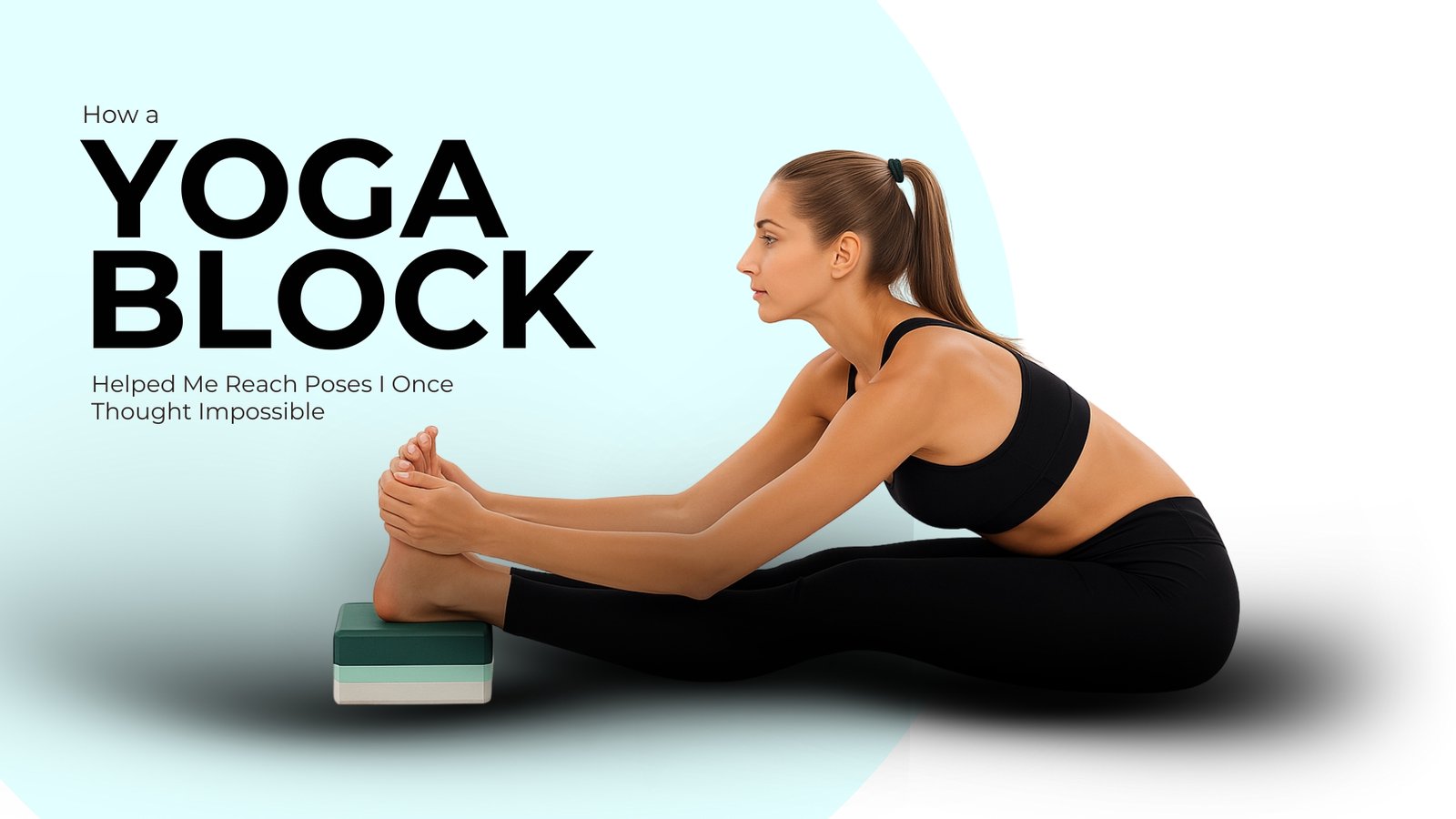
I thought that my body just had its limits.Then, the day I actually started practicing with a yoga block this belief changed.
When I initially used a yoga block, I used it as a sort of transitional item, a prop to use until I was fit enough to do the exercise correctly. Along the journey, I had somehow internalized the notion that the use of props implied that I was not making gains.
As a matter of fact, the yoga block did not decrease my practice. It refined it.
The block enabled my body to remain straight rather than crumbling. It allowed me room to breathe, to feel and to know what each movement demanded. I started to get smarter instead of working harder.
Yoga block is not very complex, yet the effect is immense. It enables the positioning of alignment before depth by minimizing the distance between your body and the floor.
The block does not impose any form of flexibility, but instead promotes natural extension. Instead of struggling to balance, it provides balance. The body is no longer in conflict with gravity, but it collaborates with it.
Yoga blocks help with:
When the alignment is enhanced, the body starts to open itself.
I used to use a lot of effort before employing a yoga block. I reached further, lingered and endured pain because I thought sustainability was the only thing that would bring about a change. Rather my body reacted with exhaustion and strain.
Mellowing into awareness was the block.
None of this was achieved through intensity, but through proper repetition. Breathing became smoother. Muscles engaged evenly. Movements were purposeful and not hurried.
The practice was made sustainable- and sustainability transformed everything.
I didn’t change my routine dramatically. I simply introduced the yoga block where my body needed assistance. Over time, it became part of my natural flow.
|
Practice Phase |
Duration | Purpose | Role of Yoga Block |
|
Warm-Up |
5–10 minutes | Prepare joints & spine | Gentle lift and support |
|
Standing Work |
15 minutes | Stability & strength |
Improves reach and balance |
| Seated Practice | 15 minutes | Posture & flexibility |
Elevates hips for alignment |
| Cool-Down | 10 minutes | Rest & release |
Supports relaxation |
This structure allowed me to practice consistently, even on low-energy days.
The most surprising thing was that the actual change did not have certain postures. The change occurred in my attitude to movement overall. As soon as I started to train with proper assistance my body ceased to resist and began to react.
I had seen some things better that went way up the mat:
It was no longer an experience of challenges to be overcome. It was almost a stream of consciousness, as each action was backed by another.
Yoga was not about going somewhere new but rather knowing where I had been.
One unexpected benefit of using a yoga block was the kind of strength it developed. Not aggressive strength, but balanced, functional strength.
Because alignment improved:
This strength felt calm and reliable. It carried into daily posture, walking, and even how I sat or stood.
Flexibility once felt intimidating. I worried about overstretching or compensating incorrectly. The yoga block changed that relationship completely.
Using a block allowed me to:
Flexibility stopped being something I chased. It became something that unfolded naturally.
Not all yoga blocks feel the same. The right block should feel supportive without being uncomfortable.
|
Type of Yoga Block |
Best Use | Benefit |
|
Foam Block |
Daily practice | Lightweight and gentle |
| Cork Block | Stability work |
Firm and eco-friendly |
| Wooden Block | Advanced alignment |
Maximum support |
For most practitioners, foam or cork blocks offer the best balance of comfort and stability.
To truly benefit from a yoga block:
A yoga block is most effective when used with intention.
Yoga is not about achievement—it is about longevity. Anything that helps you practice safely, consistently, and with awareness belongs in your routine.
Yoga blocks:
They are not shortcuts. They are foundations.
The yoga block did not immediately make it easier to pose. The patience, trust, and understanding it brought me were what it gave me. It also taught me that one does not achieve progress by working harder and instead gives support where necessary.
There are so many things that are not hindered by the impossibility: but rather by the lack of assistance.
In my case, the yoga block became my support.
Copyright © 2025. Myspirityoga.com. All Rights Reserved
WhatsApp us