
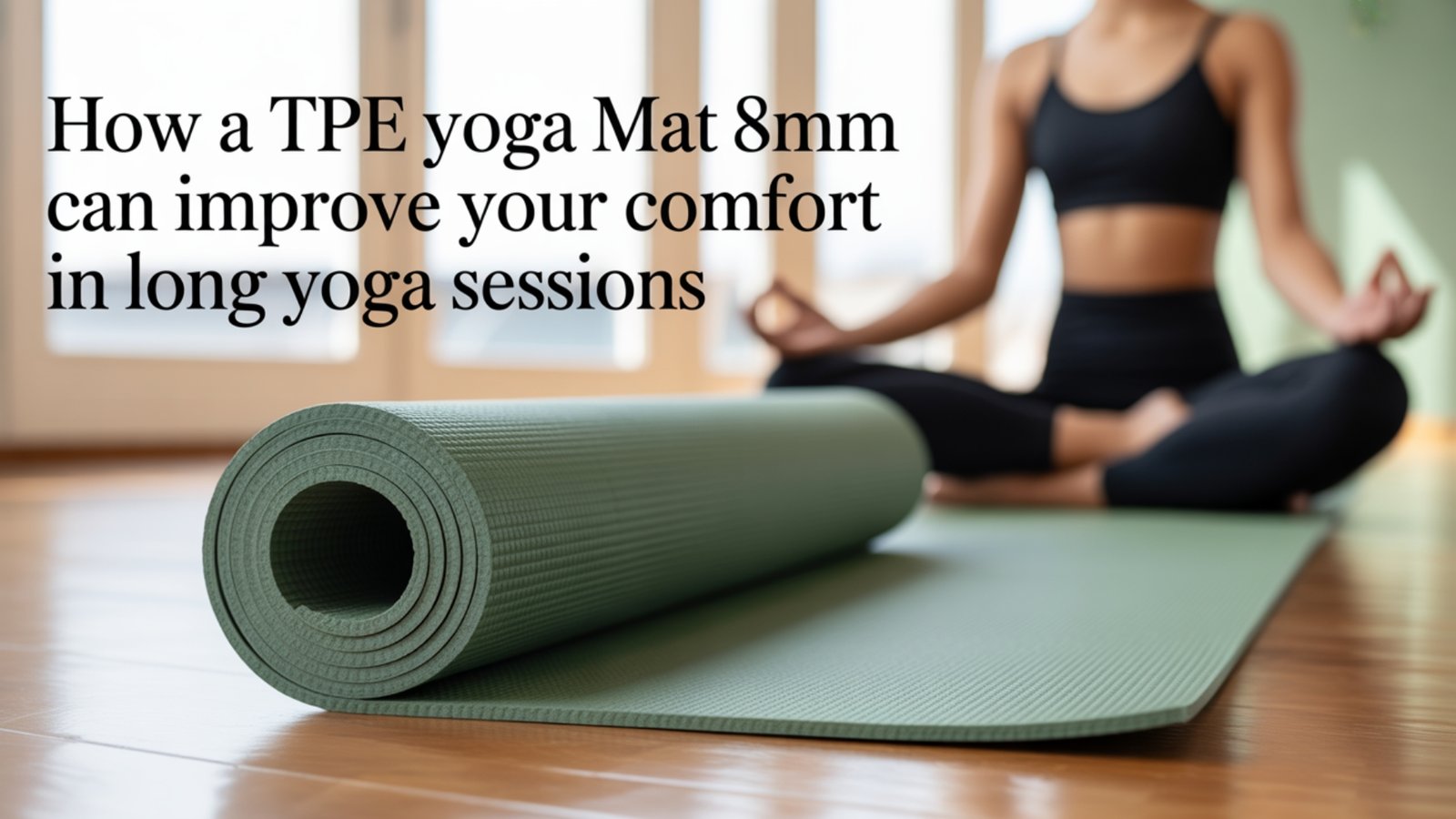
Yoga may seem simple from the outside—just stretching, breathing, and holding postures—but anyone who has practiced for a long time knows that your mat silently determines how comfortable and effective every session feels. As your practice becomes deeper and longer, the small discomfort you ignore at the beginning slowly becomes the reason your joints start feeling sore or your focus keeps breaking during a pose. That is exactly why an TPE yoga mat 8mm has become such a preferred choice among yogis who want long practice sessions without discomfort.
An 8mm mat offers a thicker, softer, and more supportive base compared to regular yoga mats. This added thickness is especially helpful during floor-intensive practices, slow yoga styles, and meditation sequences where pressure remains on elbows, knees, or the spine for extended periods. Instead of feeling sharp resistance from the floor underneath, your joints experience a cushioned surface that adapts to your body weight. That simple difference changes the way your entire practice feels.
When your body relaxes, your mind follows. When your posture feels stable, your breathing becomes deeper. And when pressure points stop bothering you, your attention slowly turns inward. That is why comfort is not a luxury—it is a requirement for better yoga.
A TPE yoga mat is made from a modern material called Thermoplastic Elastomer—a compound designed to feel soft like rubber while being lightweight and flexible like foam. What makes TPE different from older mat materials is its safety and eco-conscious composition. Many traditional mats are made using PVC, which can feel slippery, heavy, and contain chemicals that are not ideal for long daily use.
TPE, on the other hand, is designed to be skin-friendly, free from harsh toxins, and gentle enough for sensitive users, including seniors and people with joint discomfort. Because it doesn’t produce strong odors or irritate the skin, your body feels naturally comfortable spending long periods on the mat, especially during meditation or lying postures.
If you practice yoga for five minutes, any mat works. But if your practice extends into longer routines—thirty minutes, forty-five minutes or more—you start noticing how much the hardness of the floor influences your comfort.
An 8mm mat supports the body in subtle yet powerful ways. Kneeling feels gentler, lying postures become more relaxing, and transitions through floor-based movements don’t feel uncomfortable. The thicker surface protects sensitive joints and helps the body stay soft instead of tense, which means your nervous system remains calmer throughout the session.
When your base feels supportive, you automatically stay longer in poses and enjoy them instead of rushing through discomfort.
Modern yoga includes several sequences where the body makes deep contact with the floor—Child Pose, Cat-Cow, Cobra, Pigeon, and long breathing exercises. With a thin mat, joints take more pressure, which over time might create discomfort or mild soreness.
On an TPE mat 8mm, the body feels gently supported. Knees don’t press directly into the hard ground, elbows remain relaxed, and the lower back feels cushioned. This additional padding creates a natural feeling of safety and ease, which is essential when holding stretches for longer durations.
Most people imagine yoga as movement and stretching, but a large part of yoga is stillness—seated meditation, deep breathing, pranayama, and Savasana. These parts of practice require the body to remain in a single position for several minutes.
A thicker mat prevents your spine from feeling the floor, making long meditation more comfortable. Your hips feel more relaxed, your knees are supported, and your body settles into stillness more naturally. When physical discomfort disappears, meditative focus becomes much deeper.
Many people begin yoga to improve mobility or reduce physical discomfort, but ironically, thin mats can create pressure on the same areas you are trying to heal. The extra thickness of an 8mm mat acts like a supportive layer beneath your joints. Instead of pressing directly into the ground, your joints rest on a soft surface that absorbs pressure and prevents strain.
People living with mild knee problems, lower-back sensitivity, or wrist discomfort find that a thick TPE mat gives them the confidence to practice without worrying about pain. This allows them to continue yoga consistently instead of avoiding certain poses.
There is a common assumption that thicker mats reduce stability, but TPE material maintains a balance of softness and firmness, so your feet don’t sink in even at 8mm thickness. Instead of sliding during downward dog or balancing poses, your palms and feet grip the surface firmly because TPE offers a naturally anti-slip texture.
This makes your transitions smoother, your standing sequences safer, and your balance postures more confident.
Most homes—especially in India—have hard floors such as marble, tiles, or wooden surfaces. Early morning practice often feels cold and uncomfortable on thin mats. A thicker mat provides insulation from the cold floor and keeps your body warm enough to stretch safely, especially during winter or early morning yoga.
Beginners often feel discomfort faster because joints are not used to putting pressure on the ground. For them, starting with an 8mm mat makes yoga more inviting and pleasant. Seniors benefit from added cushioning, especially in kneeling and seated postures. Even experienced yogis prefer thicker mats during slow practices or meditation-focused sessions.
In simple words, 8mm thickness suits nearly every yoga style—from Hatha to Restorative, from beginners to advanced practitioners.
TPE mats are surprisingly long-lasting even with everyday practice. The material does not absorb sweat or moisture easily, which means the mat remains hygienic and fresh. Cleaning usually requires only a mild wipe down, and the mat dries quickly without losing shape.
When cared for correctly, a TPE mat can stay supportive for several years of yoga practice.
The longer you stay on the mat, the more your body depends on comfort. An 8mm mat prevents discomfort from building up over time. Instead of adjusting and shifting constantly, you relax into every posture. You breathe more deeply, hold stretches more peacefully, and finish your session feeling recharged instead of sore.
Comfort becomes the foundation that allows growth.
Choosing a yoga mat may seem like a simple decision, but the right mat changes how your body experiences every pose, every breath, and every moment on the floor. A tpe yoga mat 8mm thickness brings together comfort, cushioning, grip, and support—everything you need for long, enjoyable, and mindful yoga sessions.
If your goal is to practice longer without discomfort, explore deeper stretches, and focus more on your body and breath, an 8mm TPE mat is one of the best upgrades you can bring into your yoga routine.
Copyright © 2025. Myspirityoga.com. All Rights Reserved
WhatsApp us