
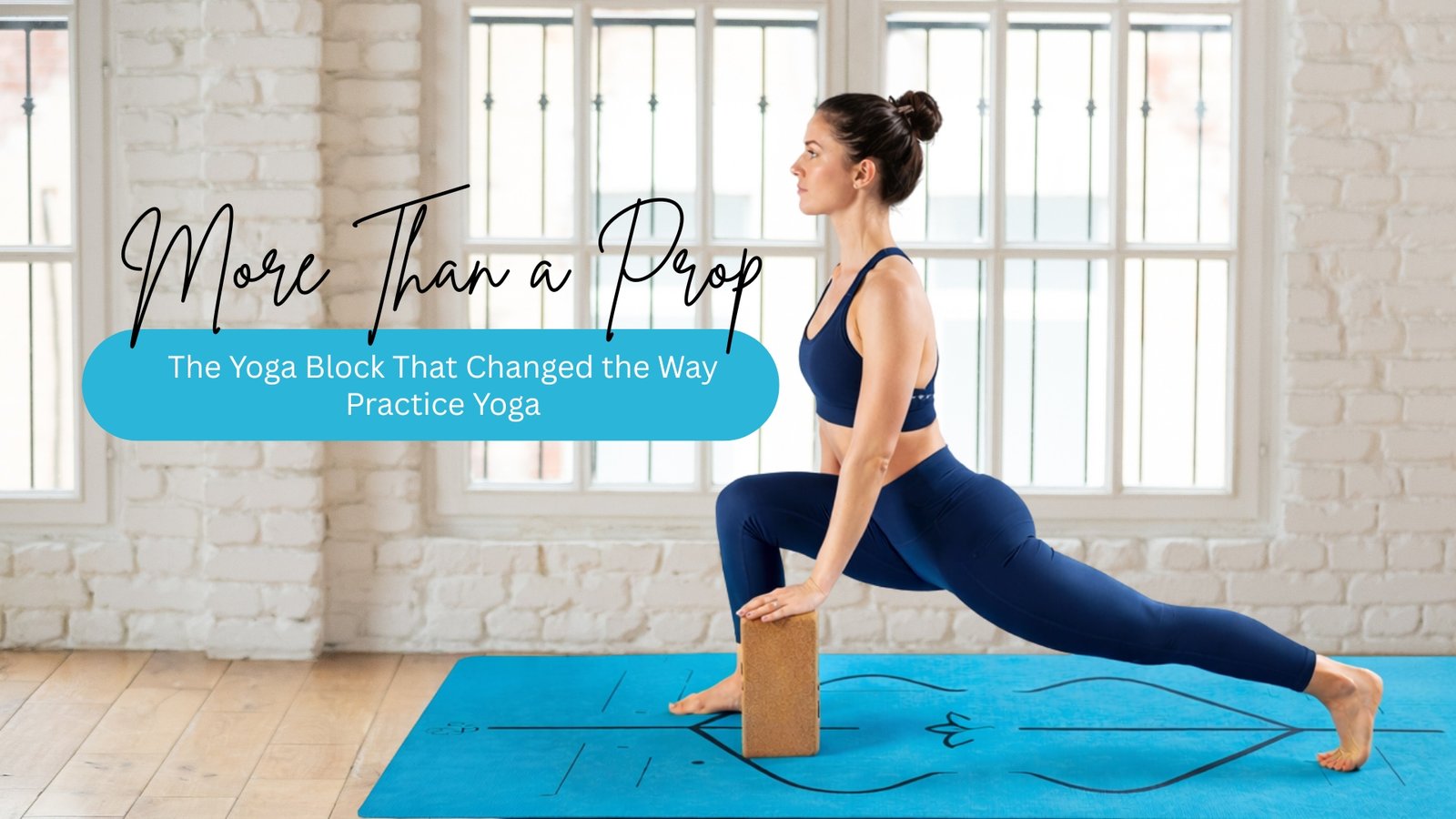
For the longest time, I believed yoga was only about flexibility, strength, and holding poses perfectly. I thought props were meant only for beginners or people who were “not flexible enough.” Like many yogis, I wanted to flow freely without support. That belief changed the day I truly understood the power of a yoga block.
What I once considered optional became essential. A yoga block didn’t weaken my practice—it transformed it. It brought awareness, safety, alignment, and confidence into every pose. This is the story of how a simple yoga block became more than a prop and changed the way I practice yoga forever.
In my early yoga days, I struggled silently. Tight hamstrings made forward folds uncomfortable. My balance wavered in standing poses. Backbends felt forced rather than freeing. I often compared myself to others in the room and pushed my body beyond its limits.
I ignored discomfort, thinking pain was part of progress. But deep inside, my practice felt incomplete. I was practicing poses, not yoga.
That’s when a teacher gently placed a yoga block in my hands and said, “Support yourself first. Strength will follow.”
Using a yoga block for the first time felt strange. In Trikonasana, instead of reaching desperately for the floor, my hand rested comfortably on the block. My chest opened naturally. My spine lengthened. For the first time, the pose felt stable, aligned, and calm.
That moment changed everything.
The yoga block didn’t make the pose easier—it made it correct.
A yoga block is not a shortcut. It is a tool that meets your body where it is today. Yoga is not about how deep you go into a pose, but how mindfully you arrive there.
The yoga block acts as:
With consistent use, the block helped me understand my body’s limits without judgment.
Not all yoga blocks are the same. Over time, I realized that the quality of the yoga block matters just as much as its use. A well-designed yoga block enhances comfort, safety, and confidence in every pose.
Here are the key qualities that make a yoga block perfect for practice:
A good yoga block should be firm enough to bear body weight without collapsing, yet comfortable enough to support sensitive joints. This balance provides confidence during standing poses, seated stretches, and restorative postures.
A lightweight yoga block allows easy transitions between poses. Whether moving through a flow or holding a posture, the block should feel like a natural extension of your hands.
Grip is essential. A high-quality yoga block offers a non-slip surface that stays steady even during sweaty sessions. This prevents slipping and ensures safety, especially in balance poses.
A perfect yoga block maintains its shape over time. It should not chip, compress, or lose firmness with regular use, making it ideal for both home and studio practice.
An eco-friendly yoga block supports both your body and the environment. Sustainable materials align with the yogic principle of mindfulness and respect for nature.
Alignment was one of the biggest gifts the yoga block gave me.
In poses like:
The yoga block helped stack my joints correctly. My hips felt balanced, my spine stayed long, and my chest opened with ease. Instead of collapsing into poses, I learned to lift, engage, and stabilize.
This alignment reduced strain on my knees, lower back, and shoulders, allowing me to practice longer and more consistently.
Surprisingly, the yoga block also made my practice stronger.
By placing a yoga block between the thighs or hands, I learned how to activate muscles properly. In poses like Chair Pose or Bridge Pose, the block encouraged engagement and awareness.
The block didn’t replace strength—it trained it.
Flexibility comes with patience, not pressure.
The yoga block allowed me to stay in poses longer without discomfort. In seated forward folds or hip openers, the block supported my torso and hips, helping muscles relax naturally.
Instead of forcing flexibility, the yoga block taught my body to open gradually and safely.
One of the biggest myths is that yoga blocks are only for beginners. In reality, advanced practitioners use yoga blocks to refine alignment, explore deeper variations, and practice safely.
Whether you are:
A yoga block adapts to your journey.
Beyond physical support, the yoga block changed my mindset.
Knowing I had support removed fear from my practice. I stopped worrying about falling, straining, or “doing it wrong.” This confidence brought calmness and focus to my breath and movements.
Yoga became less about performance and more about presence.
The yoga block is perfect because it:
It doesn’t judge your flexibility or strength. It simply supports you where you are.
Today, my yoga mat feels incomplete without a yoga block beside it. What started as a small foam accessory became a trusted companion in my yoga journey.
The yoga block didn’t change yoga—it changed how I practiced yoga.
It reminded me that yoga is not about reaching the floor, holding the longest pose, or competing with others. Yoga is about awareness, balance, and respect for the body.
Sometimes, the smallest support makes the biggest difference.
Copyright © 2025. Myspirityoga.com. All Rights Reserved
WhatsApp us