
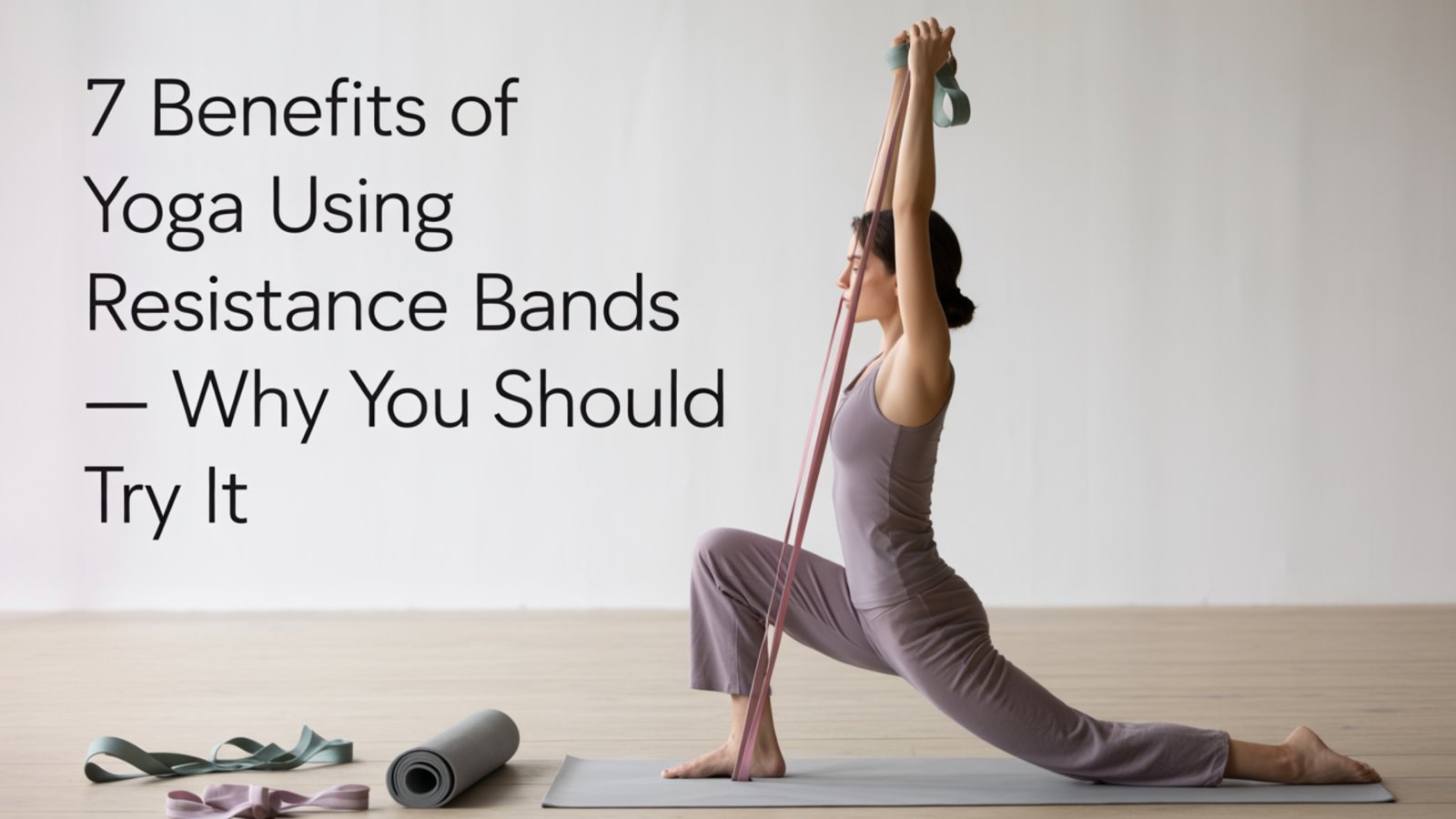
Yoga has always been a practice grounded in mindful movement, conscious breathing, and a deep awareness of the body. Over time, thousands of yogis have discovered that adding small, helpful tools to their practice can accelerate progress and deepen understanding. Among the many accessories available today—yoga blocks, straps, cushions, wheels, and mats—resistance bands have emerged as an incredibly powerful addition to modern yoga routines.
Whether you are a beginner taking your first steps on the mat, an intermediate practitioner trying to improve strength and alignment, or an advanced yogi refining balance and stability, resistance bands provide a unique blend of support, challenge, and refinement.
This ultimate guide explores the 7 powerful benefits of yoga using resistance bands, shows how they enhance flexibility and strength, explains why they help you progress faster, and offers practical tips for weaving them into your daily practice—especially when paired with the supportive, high-quality yoga gear available on website.
Before diving into the benefits, it is important to understand why resistance bands have become so popular in yoga studios, fitness centers, and home practice spaces.
Resistance bands:
They bring the perfect combination of challenge, mobility, and mindful control. While a yoga mat creates a safe foundation and props like blocks or cushions help with alignment, resistance bands add a new level of muscular engagement.
Together with premium mats, blocks, and accessories from SpiritYoga, resistance bands transform your yoga session into a balanced, full-body experience.
Traditional strength training typically involves weights, machines, or gym equipment—yet resistance bands can recreate the same muscle activation, often with better control and reduced risk of injury. In yoga, strength is not about lifting heavy objects; it’s about developing stable, functional muscles that support posture, mobility, and balance. This is where resistance bands shine.
Resistance bands provide progressive resistance, meaning the tension increases as you stretch them. This constant tension makes muscles work through the entire range of motion.
Using bands in yoga helps you strengthen:
These muscles support almost every yoga pose—from standing postures to seated stretches to backbends.
Unlike heavy weights, bands protect your joints and encourage slow, controlled movement—perfect for mindful strength building.
With the right yoga mat from our website, you stay stable even during high-resistance movements.
Flexibility is an essential component of yoga, but many people push too hard or fall out of alignment while trying to reach deeper stretches. Resistance bands provide support, feedback, and control, allowing you to stretch safely while maintaining proper posture.
Bands act like an extension of your arms or legs. They let you:
Using a band during a hamstring stretch, for example, helps you maintain your torso upright rather than rounding your spine. The band distributes the pulling force more evenly across your muscles.
Combined with a cushioned yoga mat from MySpiritYoga, these stretches become more comfortable and effective.
One of the biggest challenges in yoga—especially for beginners—is understanding alignment. It’s easy to drop the shoulders, collapse the chest, tilt the pelvis incorrectly, or twist unevenly. Resistance bands act as a guide, giving you instant feedback whenever you move out of alignment.
Because bands create tension, you instantly feel when you lose stability. For example:
This tactile feedback helps you become more aware of how your body moves. Over time, your alignment improves naturally—even when you are not using a band.
Pairing bands with supportive yoga blocks and cushions from MySpiritYoga strengthens these improvements even further.
Yoga is deeply rewarding, but even dedicated practitioners sometimes feel their routine becomes repetitive. Resistance bands inject new energy, helping you challenge muscles in fresh ways and keeping your practice enjoyable, progressive, and creative.
When the body adapts to repetitive movements, progress slows. Adding resistance bands:
Yoga using bands creates exciting combinations of strength and stretch that keep the practice interesting.
If you use a non-slip yoga mat from MySpiritYoga, transitions become smoother and safer.
A strong core is essential for yoga. It supports:
Resistance bands dramatically improve core activation because they require constant stabilization.
When you use a band:
This results in a strong, stable midsection—one of the most important foundations in yoga.
Using a thick, supportive yoga mat from MySpiritYoga makes these exercises comfortable and joint-friendly.
One of the best things about yoga using resistance bands is that it adapts easily to every level—whether beginner, intermediate, advanced, senior, or recovering from stiffness or mobility limitations.
Unlike heavy equipment, bands are gentle, adjustable, and non-intimidating.
For Beginners:
Bands help maintain balance, improve posture, and support stretches.
For Seniors:
Bands allow safe, low-impact strengthening and mobility work.
For Intermediate Yogis:
Bands add resistance to traditional poses, improving strength.
For Advanced Yogis:
Bands add challenge to transitions, flows, and inversions.
MySpiritYoga’s meditation cushions and premium mats make these practices even more supportive.
Yoga is more than physical movement; it is about awareness—knowing how your body feels, moves, and responds. Resistance bands enhance this awareness because they create tension you can feel instantly.
When you pull a band, your muscles respond visibly and tangibly. This helps you understand:
This awareness strengthens your practice on and off the mat.
This feedback helps you build a healthier, more mindful movement pattern.
Starting is simple. You don’t need fancy equipment—just a high-quality yoga mat from MySpiritYoga, a comfortable cushion, and a resistance band.
There are generally three types of bands used in yoga:
Beginners should start with light to medium resistance.
A warm-up helps activate key muscles:
This prepares your body for deeper yoga movements.
Start with simple poses like:
This makes familiar poses more effective.
Once comfortable, you can incorporate bands into:
Using supportive props and mats from MySpiritYoga helps you maintain form.
Ending the session with bands helps lengthen muscles:
These keep muscles healthy and flexible.
Yoga using resistance bands is more than just a trend—it’s an evolution of traditional yoga, adapted for modern lifestyles and diverse body needs. With bands, your practice becomes:
Whether you’re trying to build strength, deepen flexibility, recover from stiffness, or simply refresh your routine, resistance bands offer a powerful solution. When paired with high-quality yoga gear from MySpiritYoga—from cushioned mats to blocks to meditation supports—you create the ideal environment for growth, comfort, and transformation.
Copyright © 2025. Myspirityoga.com. All Rights Reserved
WhatsApp us